
A Safer Way to Access Flat Roofs and Elevated Workspaces

February 2, 2026

Working on flat roofs and elevated workspaces is a common requirement across construction, transport, facilities management and utilities. Yet it remains one of the most challenging areas to manage safely. Whether accessing the roof of a bus, a welfare unit, a container, a substation or a commercial building, safety at the point of access, plus edge protection on the roof itself is critical.


The challenge of accessing flat roofs safely

Flat roofs and elevated workspaces are widely used for:

  • Plant and equipment maintenance
  • Vehicle and fleet servicing
  • Inspections and surveys
  • Installation and repair work

While the work itself may be straightforward, getting safely onto the roof and working hands-free when in the workspace is often where problems arise.


Common issues include:

  • Limited or no edge protection
  • Unsafe transitions from access equipment to roof
  • Increased risk of falls during access and egress

In many environments, these risks are difficult to eliminate using standard ladders or basic access equipment.


Introducing the Lyte Boxing Ring Tower (BRT)

The Lyte Boxing Ring Tower (BRT) provides a fully enclosed overhead workspace that creates true 360-degree fall protection around the work area. This unique “boxing ring” design removes the need to install temporary edge protection before stepping onto the flat roof surface, offering a safer, faster setup for a wide range of elevated tasks.


The BRT integrates with Lyte’s HiLyte Tower System and uses a transition deck to allow operatives to step safely onto the roof or elevated surface. The overhead frame extends out from the tower, allowing safe access to work areas where conventional towers cannot reach. This is especially suited to rail, transport, utilities and site accommodation applications.


Key features include:

  • 360-degree fall protection barriers around the workspace area
  • Controlled transition from tower to roof
  • Secure, stable access for repeated use
  • Designed for flat roofs and elevated workspaces


Once on the roof, operatives can work as required, knowing that the most hazardous part of the task, the access and egress, has been properly controlled. The work is carried out on the roof or surface itself, while the Boxing Ring Tower frame provides 360-degree fall protection around the workspace.


Applications for the Boxing Ring Tower

The BRT delivers a significantly safer method of access for tasks where users must transition from a tower onto a flat work surface. The solution was developed in response to a transport sector requirement for safe roof access on buses, but the same access challenges exist across many industries. The Lyte Boxing Ring Tower is suited to a wide range of real-world applications, including:

  • Buses, coaches and commercial vehicles
  • Trains and rail vehicles
  • Flat roofs and rooftop plant
  • Substations and utilities infrastructure
  • Containers, welfare units and modular buildings

The fully enclosed “boxing ring” workspace surrounds the user and provides 360-degree fall protection, significantly reducing risk when transitioning onto elevated structures.


Designed and manufactured in the UK

The Boxing Ring Tower is designed and manufactured in the UK, ensuring:

  • Consistent quality and durability
  • Clear specifications for professional use
  • Long-term support and availability

This makes it suitable not only for end users, but also for hire companies, contractors and facilities teams who need reliable access solutions.


Learn more about the Lyte Boxing Ring Tower

If you are responsible for working at height on flat roofs or elevated workspaces, and want a safer way to manage access, the Lyte Boxing Ring Tower offers a practical, purpose-built solution.

👉 View the product here:
https://www.lyteladders.co.uk/product/lyte-boxing-ring-tower-BRT
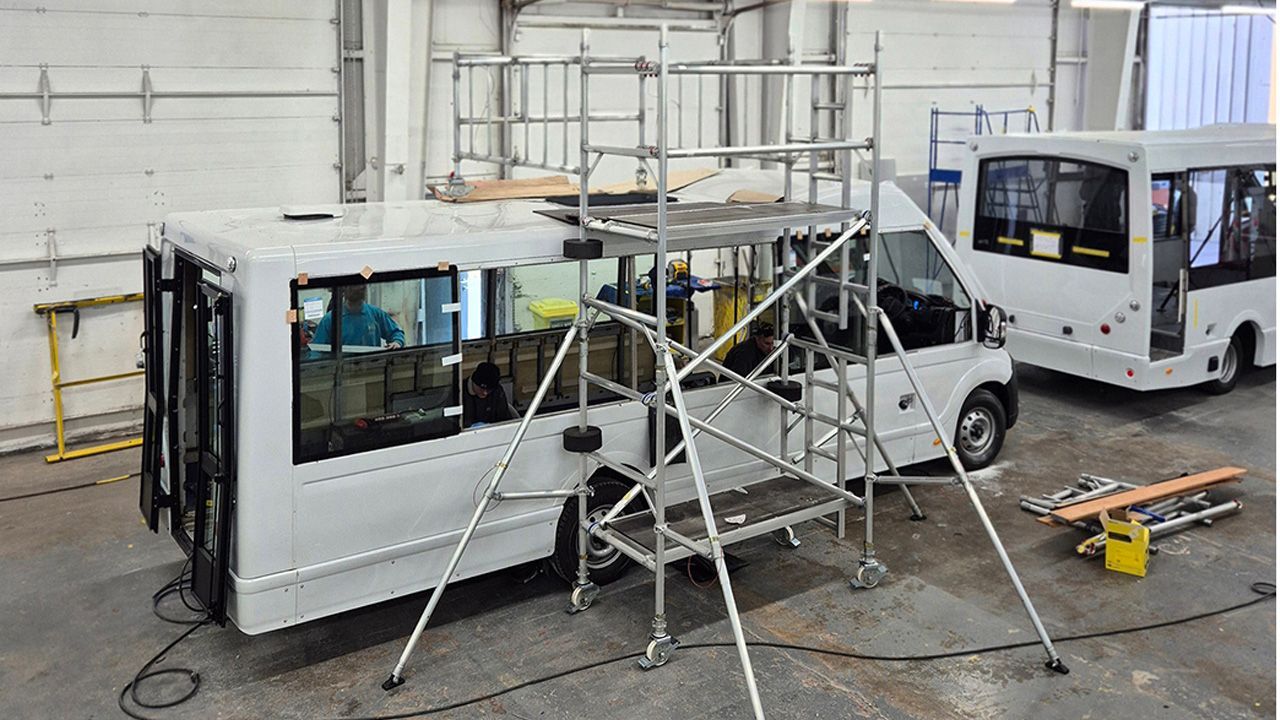

Boxing Ring Tower being used on a bus roof
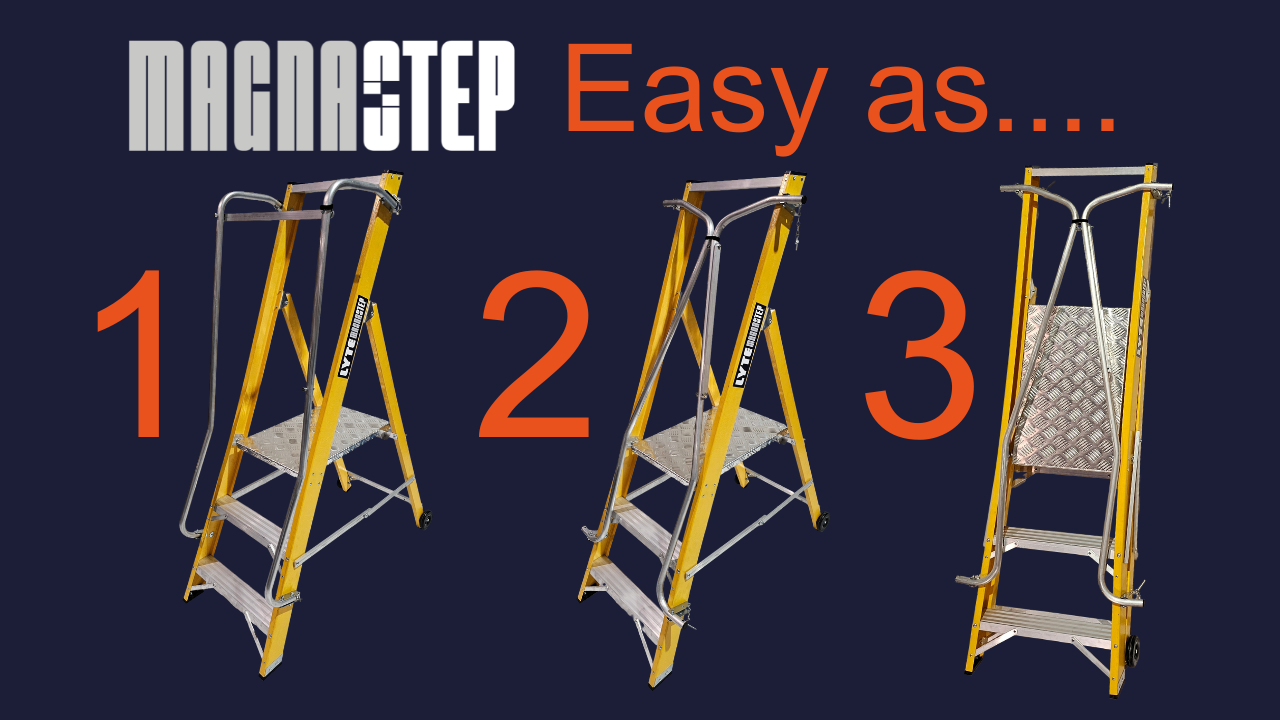
Shows stages of folding handrails from fully open to fully closed
March 30, 2026
Improving safety on site, without compromising transport and storage Working at height often requires a balance between stability, safety and practicality . For many tradespeople and facilities teams, wide step podium ladders with handrails provide the confidence and support needed for longer-duration tasks. However, traditional fixed handrail systems can introduce challenges when it comes to transport, storage and handling . Lyte’s latest update to the MagnaStep Widesteps solves this with the introduction of folding handrails , designed to improve usability without compromising performance. A Smarter Approach to Handrails The new folding handrail system allows the handrails to be: Quickly deployed for use when working at height Folded down neatly when the ladder is not in use This creates a more versatile solution for both on-site safety and off-site practicality . Why Are Folding Handrails Needed? Easier Transport One of the main challenges with fixed handrails is moving ladders between locations, particularly, in vans with limited space or around busy job sites. With folding handrails, the MagnaStep Widesteps can be reduced to a more compact profile , making them easier to: Load and unload Transport in vehicles Carry through tight access points For hire companies and tradespeople alike, this means less time manoeuvring equipment and more time working . More Compact Storage Storage is often overlooked, but it has a real impact on efficiency. Folding handrails allow the ladder to be stored: Flat against walls In tighter storage areas More efficiently within vans or depots For hire fleets, this can help maximise storage capacity and organisation , while for end users it reduces the footprint on site or in workshops. Maintained Safety and Support When in use, the handrails provide the same benefits expected from a professional podium step ladder: Additional support when climbing and descending Improved user confidence at height Provides 360 ° protection with safety gate when working at height This is particularly important for tasks where operatives need to: Maintain balance while handling tools Work at height for longer durations Access elevated positions repeatedly The folding mechanism enhances practicality, without reducing the core safety function of the handrails. Supporting Efficient Working at Height This update builds on the MagnaStep Widestep design, which already focuses on: Greater working height per tread Wide, fully enclosed platform for longer tasks Practical features such as magnetic tool tray Repairable construction for extended product life The addition of folding handrails further improves the balance between safety on the ladder and efficiency off it A Practical Upgrade for Trade and Hire For trade users, the benefit is clear: Easier transport between jobs Less hassle storing equipment Maintained safety when working at height For hire companies: More efficient fleet storage Easier handling for customers A stronger, more practical product offering Discover the MagnaStep Widestep Range The MagnaStep Widesteps continue to evolve based on real user needs, and the addition of folding handrails is a practical enhancement that makes a genuine difference day to day. Explore the range here .
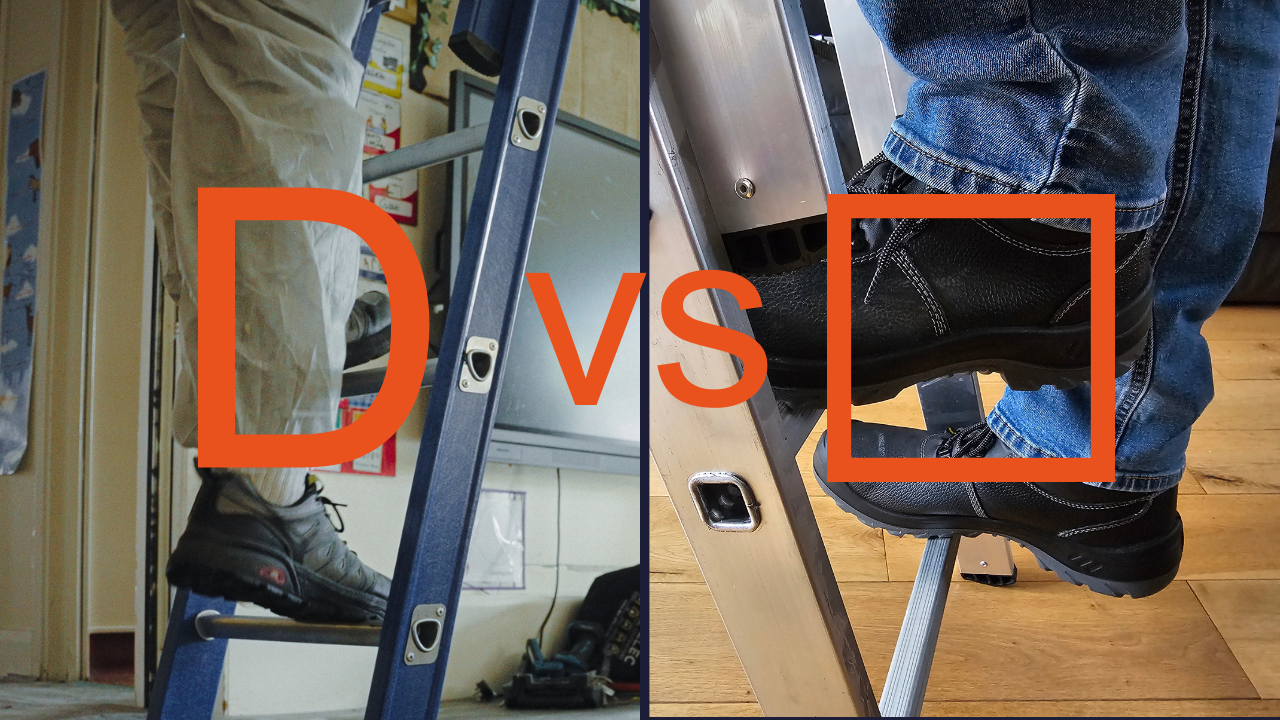
Image comparing a D-Shaped rung ladder and a Square rung ladder
February 26, 2026
Square rungs vs D-shaped rungs: discover the difference for trade use ladders and why rung design matters for comfort, safety and professional performance.
Paint pots next to a yellow fibreglass platform step ladder
November 4, 2025
Find the best ladders for decorators. From stairwells to public buildings, Lyte’s UK-made professional ladders and platforms keep decorators safe and efficient at height.